by Peter Rowland | Wednesday, October 21, 2020
Paper Wasp Scientific Name: Polistes spp. Size: 10-25mm What does it look like? The Paper Wasp is predominantly black with two pairs of brownish wings and scattered yellow or orange markings or rings on the long cylindrical abdomen. The Paper Wasp has a very narrow...

by Peter Rowland | Wednesday, October 21, 2020
Paradise Riflebird Scientific Name: Lophorina paradiseus Size: about 30 cm What does it look and sound like? Both Paradise Riflebird sexes have long, slender, decurved bills and short tails. The adult male is velvet black above the oily green below; the crown, throat,...

by Peter Rowland | Monday, October 19, 2020
Penguins (Family Spheniscidae) Penguins are confined to the southern hemisphere. Fourteen species of these mostly ocean-dwelling, flightless birds have been recorded in Australia, most as vagrants. The Little Penguin Eudyptula minor is the only species to breed on the...
by Peter Rowland | Wednesday, October 21, 2020
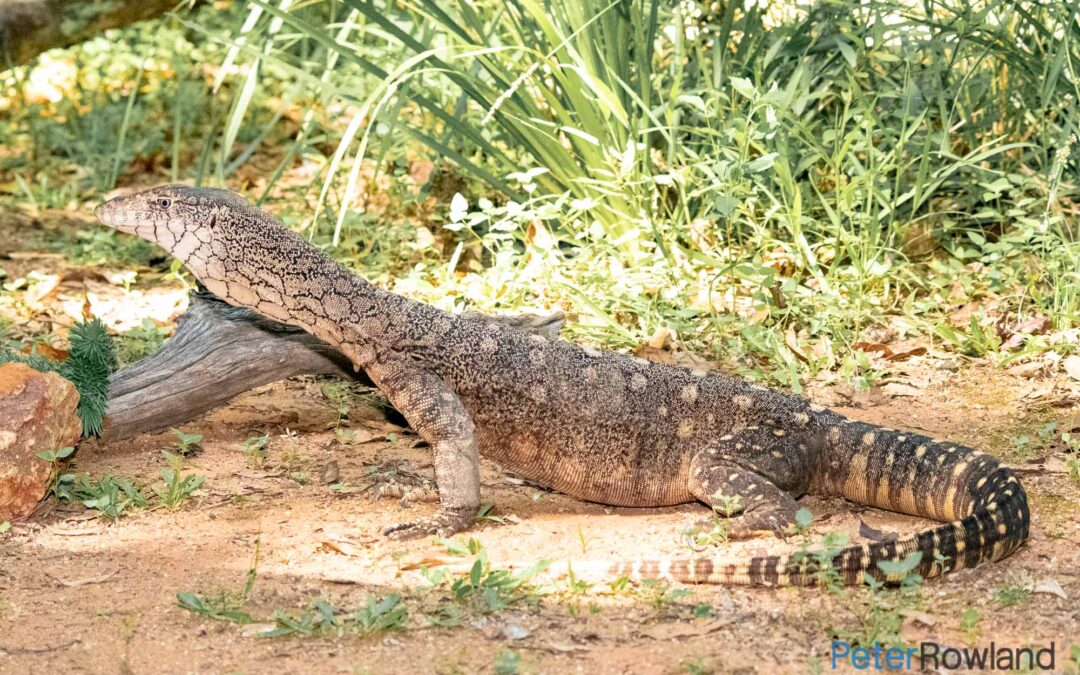
Perentie Scientific Name: Varanus giganteus Size: 2.5m What does it look like? The Perentie is Australia’s largest lizard. Pale brown to brown above, with large, yellow, dark-edged spots on their body and tail forming transverse rows, and heavy dark brown or blackish...

by Peter Rowland | Wednesday, November 4, 2020
Placentals (Infraclass: Eutheria) Placental mammals are characterised by the presence of a placenta, and include all living mammals except the marsupials and the monotremes. The placenta facilitates the exchange of nutrients and wastes between the mother and the...