by Peter Rowland | Friday, October 16, 2020
Case Moth Scientific Name: Conoeca guildingi Size: Wingspan 20 to 25mm What does it look like? The female Case Moth is grey with darker speckling, hindwings with dark margins, and abdomen banded with yellow and black. Male forewings whitish with darker speckles,...

by Peter Rowland | Friday, October 16, 2020
Cattle Egret Non-breeding plumage Breeding pair on a nest Scientific Name: Bubulcus coromandus Size: 45 to 55 cm What does it look like? Smallest of the Australian egrets, the Cattle Egret should not be confused with the larger Intermediate Egret, which occasionally...
by Peter Rowland | Saturday, November 7, 2020
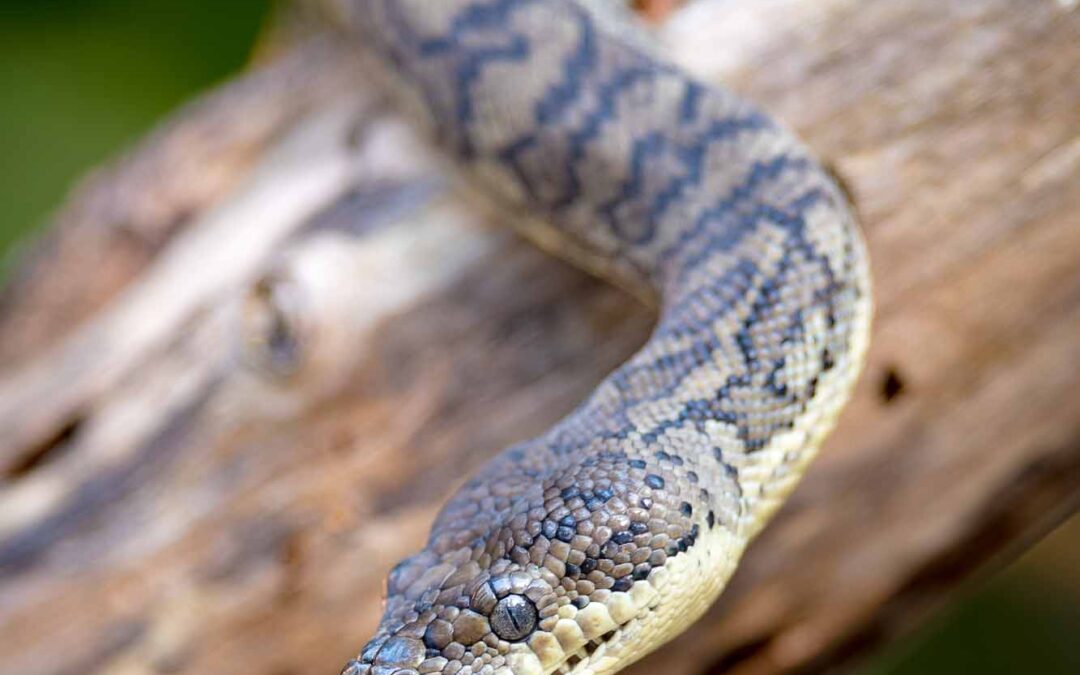
Carpet Python Scientific Name: Morelia spilota Size: Total Length 3 m What does it look like? The Carpet Python is a highly variable large python. Generally, blackish, brownish or olive-green above, with greenish-yellow spots, irregular bright yellow stripes, or pale...

by Peter Rowland | Friday, October 16, 2020
Carnaby’s Black-Cockatoo Scientific Name: Zanda latirostris Size: 54-56 cm What does it look like? Also known as the Short-billed Black-Cockatoo, the Carnaby’s Black-Cockatoo is easily confused with the Baudin’s (or Long-billed) Black-Cockatoo Zanda baudinii,...

by Peter Rowland | Friday, October 16, 2020
Black-headed Python Scientific Name: Aspidites melanocephalus Size: TL 2.5m What does it look like? The Black-headed Python is a moderately sized, smooth-scaled python, with cylindrical body and head similar in thickness to neck. Cream, yellowish or light brown, with...