by Peter Rowland | Thursday, October 22, 2020
Bush Stone-Curlew Scientific Name: Burhinus grallarius Size: 52 to 58 cm What does it look and sound like? The Bush Stone-curlew, or Bush Thick-knee (as it is often called) is a large, mainly nocturnal, ground-dwelling bird. It is mostly grey-brown above, streaked...

by Peter Rowland | Friday, October 16, 2020
Cabbage White Butterfly Scientific Name: Pieris rapae Size: Wingspan 40 mm What does it look like? The Cabbage White Butterfly is identified by white to yellowish-white colouration of wings and the presence of two black spots on the underside of each forewing. Upper...
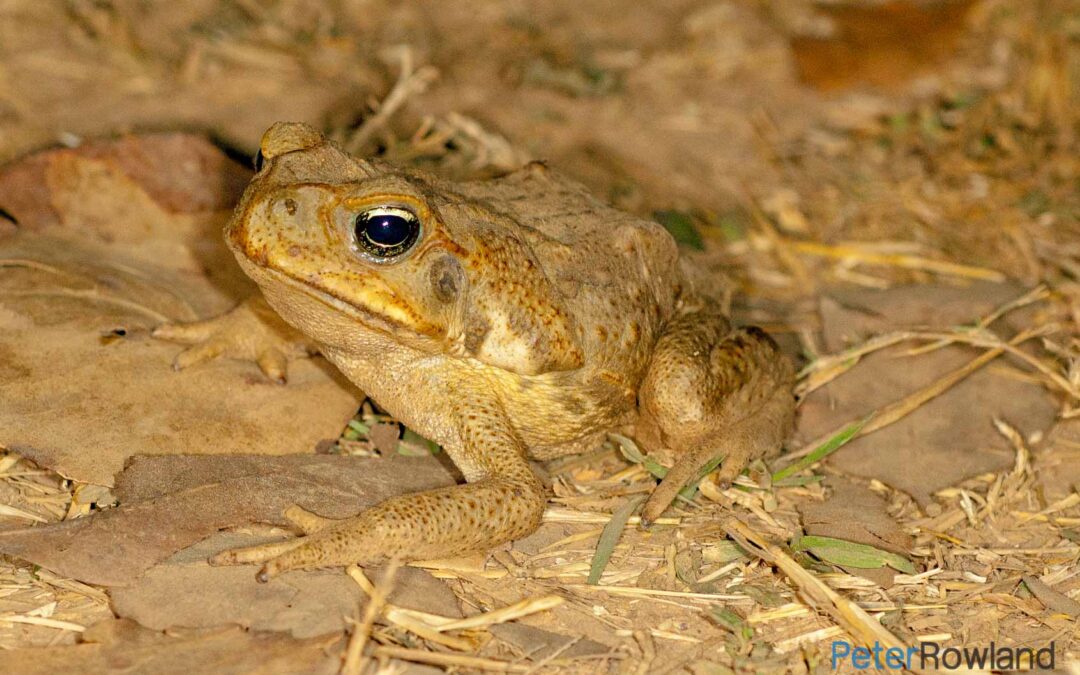
by Peter Rowland | Friday, October 16, 2020
Cane Toad Scientific Name: Rhinella marina Size: 12 cm (exceptions up to 20cm) What does it look like? The Cane Toad is yellow to brown or greyish above with black spotting; younger individuals can have red to orange spots. Juveniles grey to black, often flecked with...

by Peter Rowland | Friday, October 16, 2020
Cape Barren Goose Scientific Name: Cereopsis novaehollandiae Size: 75 to 100 (males larger than females) What does it look like? The Cape Barren Goose is an unmistakable large pale grey goose with bright yellowish cere and dark pink legs. Both sexes are similar and...

by Peter Rowland | Friday, October 16, 2020
Carnaby’s Black-Cockatoo Scientific Name: Zanda latirostris Size: 54-56 cm What does it look like? Also known as the Short-billed Black-Cockatoo, the Carnaby’s Black-Cockatoo is easily confused with the Baudin’s (or Long-billed) Black-Cockatoo Zanda baudinii,...