by Peter Rowland | Friday, October 16, 2020
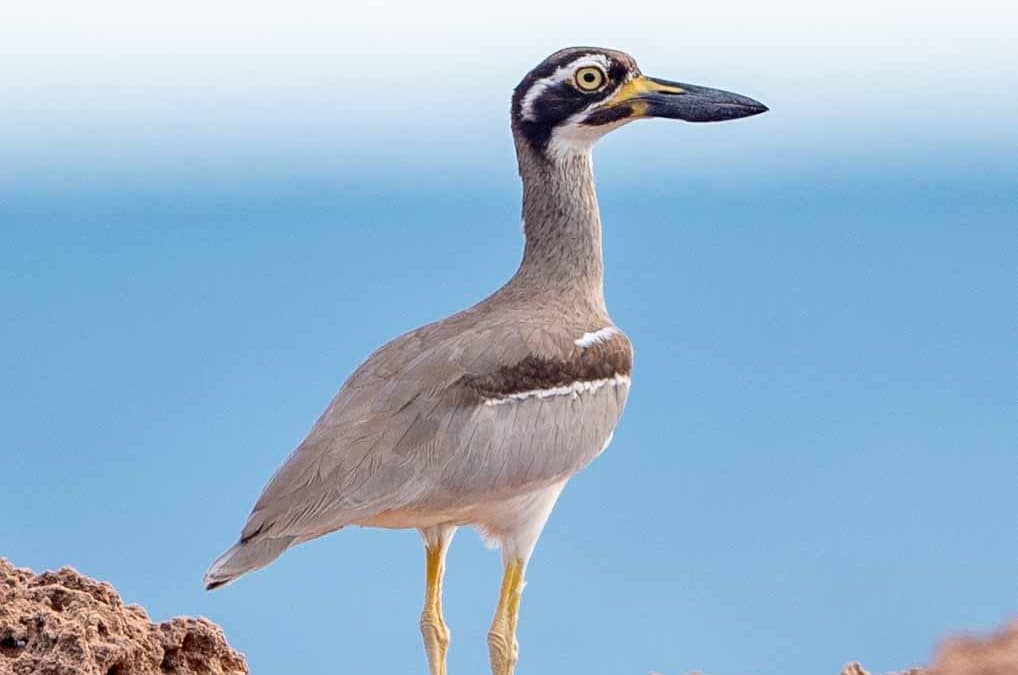
Beach Stone-curlew Scientific Name: Esacus magnirostris Size: 56 cm What does it look like? The Beach Stone-curlew is a large, heavily-built wader with a thick-set bill and conspicuous bold black and white markings on the face and upper wings. The remainder of the...

by Peter Rowland | Friday, October 16, 2020
Beautiful Firetail Scientific Name: Stagonopleura bella Size: 11 to 12 cm What does it look like? The Beautiful Firetail is generally brown-grey, with fine black and white barring and a contrasting crimson rump and bill. Conspicuous black face-mask, pale blue...
by Peter Rowland | Thursday, October 22, 2020
Black-faced Cormorant Scientific Name: Phalacrocorax fuscescens Size: 60 to 70 cm What does it look like? The Black-faced Cormorant is similar to the other pied cormorants, but has a black face. Where is it found? Black-faced cormorants are endemic to the coastal...
by Peter Rowland | Friday, October 16, 2020
Black-fronted Dotterel Scientific Name: Elseyornis melanops Size: 16 to 18 cm What does it look like? When observed the Black-fronted Dotterel is easily identified by its white underparts and distinct black Y-shaped band which extends across the chest, around to the...
by Peter Rowland | Thursday, October 22, 2020
Black-necked Stork Scientific Name: Ephippiorhynchus asiaticus Size: 129 – 135 cm What does it look like? The Black-necked Stork, or Jabiru, is the only stork found in Australia. Black and white body plumage, glossy dark green and purple neck and massive black...