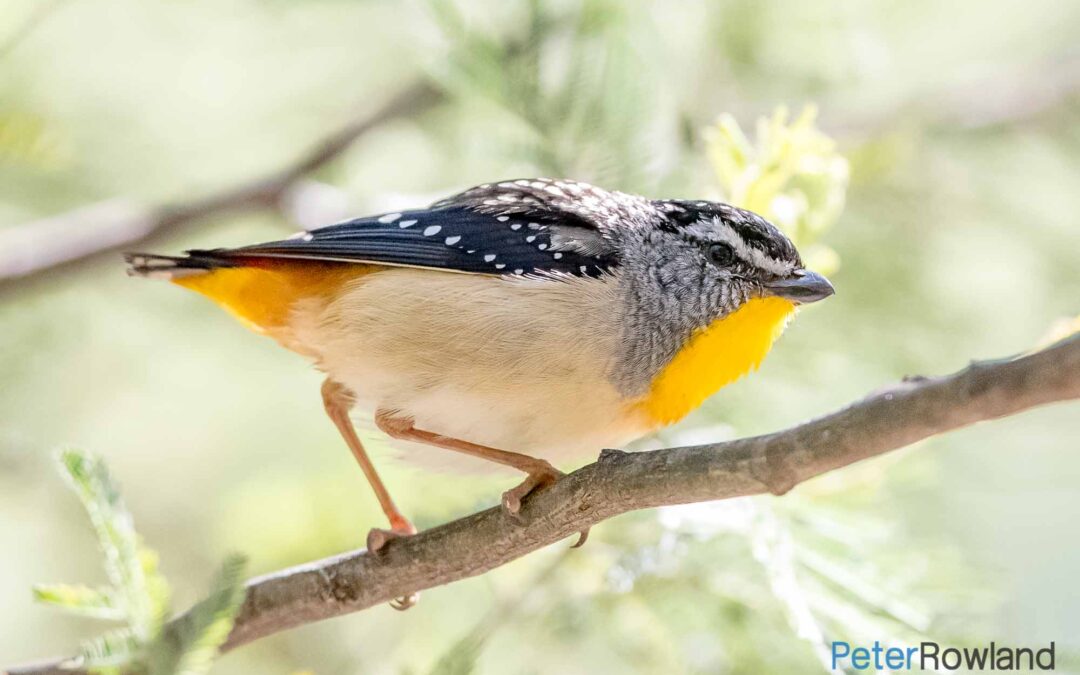
by Peter Rowland | Monday, October 19, 2020
Pardalotes (Family Pardalotidae) Pardalotes are arboreal, nesting in tree hollows or within earthen burrows. All four species are endemic to Australia. The Spotted Pardalote Pardalotus punctatus is found in the east and southwest,, the endangered Forty-spotted...

by Peter Rowland | Monday, October 19, 2020
Scrubwrens, Gerygones & Thornbills (Family Acanthizidae) The ‘little brown birds’, the scrubwrens, gerygones and thornbills, can be either terrestrial or arboreal. All members of this family have thin beaks and short, weak, rounded legs. The Lord Howe Gerygone...

by Peter Rowland | Monday, October 19, 2020
Starlings (Family Sturnidae) Seven species are present in Australia. The native Metallic Starling Aplonis metallica and the Singing Starling Aplonis cantoroides both have wider distributions, the Common Starling Sturnus vulgaris and Common Myna Acridotheres tristis...

by Peter Rowland | Monday, October 19, 2020
Swallows and Martins (Family Hirudinidae) Of Australia’s seven recorded species, only the White-backed Swallow Cheramoeca leucosterna is endemic. Other breeding species are the Welcome Swallow Hirundo neoxena, the Fairy Martin Petrochelidon ariel and Tree Martin P....

by Peter Rowland | Monday, October 19, 2020
Treecreepers (Family Climacteridae) All six species of this family found in Australia are endemic. The White-throated Treecreeper Cormobates leucophaea is common along the east coast. The Brown Treecreeper Climacteris. picumnus, Black-tailed Treecreeper C. melanurus...
