by Peter Rowland | Monday, October 19, 2020
Red Wattlebird Scientific Name: Anthochaera carunculata Size: 33 to 37 cm What does it look and sound like? The Red Wattlebird gets its name from a fleshy reddish wattles on the sides of the neck. These are found only in this species, although they can often difficult...
by Peter Rowland | Friday, November 13, 2020
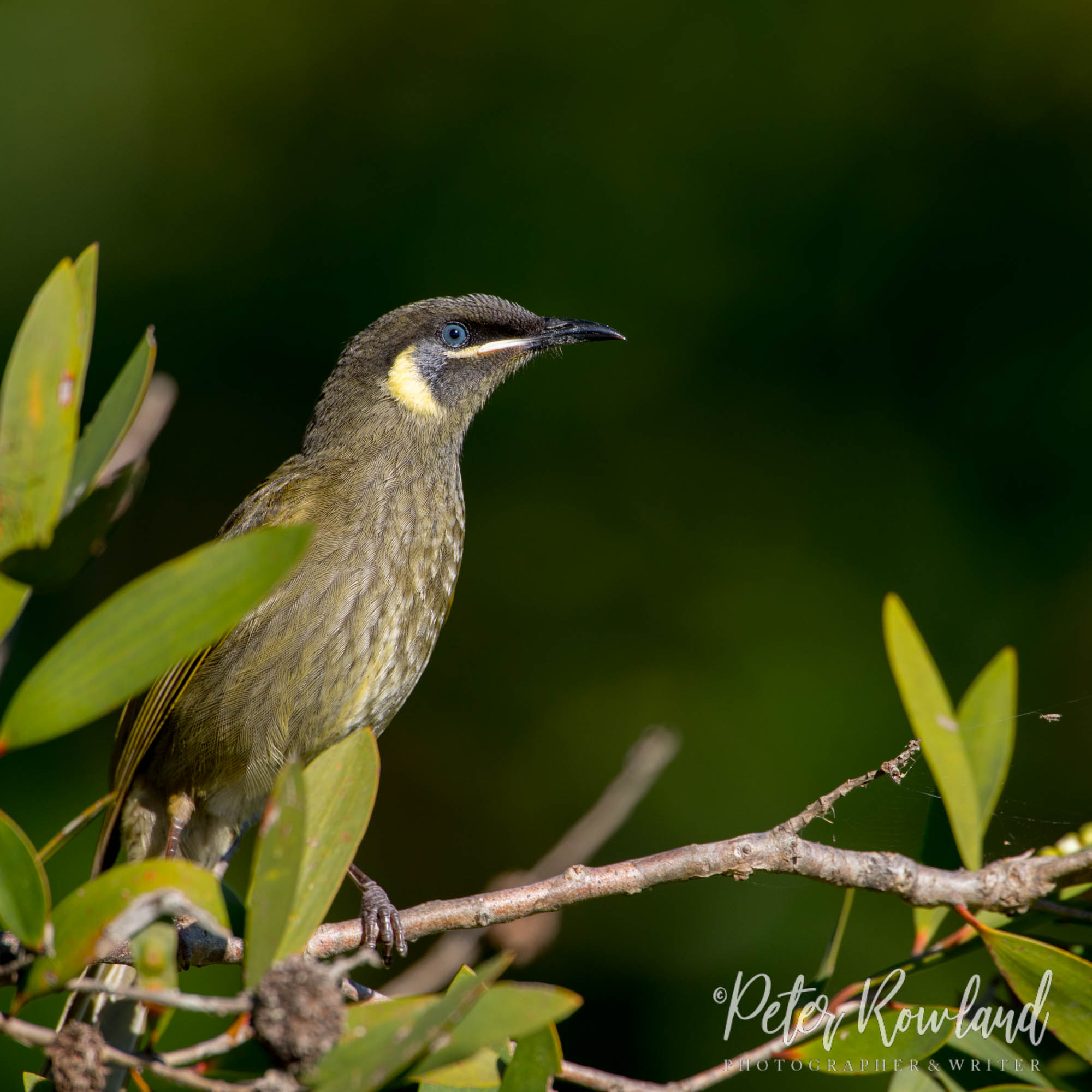
Lewin’s Honeyeater Scientific Name: Meliphaga lewinii Size: 20 to 22 cm What does it look and sound like? The Lewin’s Honeyeater is small to medium in size. It is dark greenish grey in colour, with a creamy yellow gape (fleshy corners of the mouth). It has...

by Peter Rowland | Saturday, October 17, 2020
Crescent Honeyeater Scientific Name: Phylidonyris pyrrhopterus Size: Total Length 14-16cm What does it look like? The Crescent Honeyeater is a small to medium-sized honeyeater. The male is dark grey above, paler and more grey-brown below, with a broad yellow patch on...

by Peter Rowland | Monday, October 26, 2020
Strong-billed Honeyeater Scientific Name: Melithreptus validirostris Size: 16.5 to 17.5 cm What does it look like? Slightly bigger than the similar Black-headed Honeyeater M. affinis, which is the only other member of this genus to be found in Tasmania. The...

by Peter Rowland | Tuesday, November 10, 2020
White-plumed Honeyeater Scientific Name: Lichenostomus penicillatus Size: 15 to 17 cm What does it look and sound like? The White-plumed Honeyeater is common and familiar throughout the majority of the Australian Mainland. Although the intensity of the overall...