by Peter Rowland | Saturday, October 17, 2020
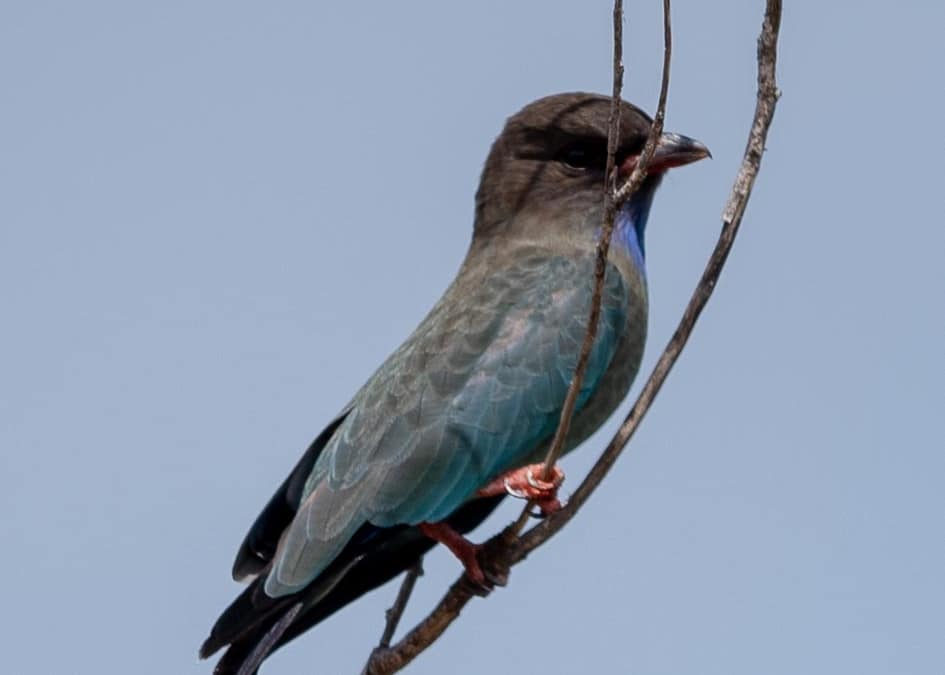
Dollarbird Scientific Name: Eurystomus orientalis Size: Total Length up to 31cm What does it look and sound like? The Dollarbird visits Australia each year to breed. It has mostly dark brown upperparts, glossed heavily with blue-green on the back and wings. The...

by Peter Rowland | Saturday, November 7, 2020
Emu Scientific Name: Dromaius novaehollandiae Size: 2 metres What does it look like? The adult Emu is grey brown with black streaks. The head and most of the neck is covered in thin black feathers. The sides of the face and the neck are plain with a pale blue to...
by Peter Rowland | Thursday, November 5, 2020
European Starling Scientific Name: Sturnus vulgaris Size: 20 to 22 cm What does it look like? The European Starling shows considerable variation in plumage. Both adults resemble each other, although the female is considered less glossy than the male. In autumn, the...
by Peter Rowland | Saturday, October 17, 2020
Comb-crested Jacana Typical habitat for the Comb-crested Jacana Scientific Name: Irediparra gallinacea Size: 20 to 27 cm What does it look like? The Comb-crested Jacana has a red fleshy forehead comb, a black crown, back and breast and brown wings. The belly, face and...
by Peter Rowland | Saturday, October 17, 2020
Crescent Honeyeater Scientific Name: Phylidonyris pyrrhopterus Size: Total Length 14-16cm What does it look like? The Crescent Honeyeater is a small to medium-sized honeyeater. The male is dark grey above, paler and more grey-brown below, with a broad yellow patch on...